Showing posts with label Events. Show all posts


Jerry Daykin is a digital marketer who has worked both client and agency side. Follow his quest for #DigitalSense over on LinkedIn
Measurement is what makes marketing a science, rather than a superstition. For many business owners, marketing is a superfluous expense—something to spend money on only when the budget is flexible enough to accommodate it. This is because the return on investment on marketing is, in many cases, unpredictable. Your ad could be a resounding hit, flooding you with thousands of new interested customers, or it could be a seeming dud, wasting your time and money.
Solid metrics give you the insight to overcome this hurdle of unpredictability. If you’re just starting out or you need to overhaul your existing marketing strategy, make sure to familiarize yourself with these 10 marketing metrics:
1. Total Visits. Your main website should be a primary target for your customers and potential customers, but you can also measure total visits to any location relevant to your strategy, such as a landing page for a pay-per-click campaign. Measuring your total number of visits will give you a “big picture” idea of how well your campaign is driving traffic. If you notice your numbers drop from one month to the next, you’ll know to investigate one of your marketing channels to figure out why. In a healthy, steady campaign, you should expect your total number of visits to grow steadily.
2. New Sessions. A metric found in Google Analytics, the total number of new sessions will tell you how many of your site visitors are new and how many are recurring. It’s a good metric to understand because it tells you whether your site is sticky enough to encourage repeat customers as well as how effective your outreach efforts are. For example, if you change the structure or content of your site significantly and your ratio of recurring visitors to new visitors drops, it could be an indication that your website is losing effectiveness in warranting multiple visits.
3. Channel-Specific Traffic. Found in the “Acquisition” section of Google Analytics, your channel-specific metrics will segment your traffic based on their point of origin. This is especially useful for a full-scale digital marketing campaign because “total visits” can’t give you an indication of which channels are outperforming the others. The four main channels to keep an eye on are:
 “direct,” which will tell you how many people visited your site directly;“referrals,” which include external links from other sites;
“organic,” which includes visitors who found you after performing a search, and;“social,” which includes visitors who found you through social media. It’s an excellent way to gauge the strengths of your SEO, social media marketing, content marketing, and traditional marketing campaigns.
4. Bounce Rate. The bounce rate shows you what percentage of visitors leave your website before further exploring your website. For example, if a potential visitor finds your homepage after searching for you and leaves the page before clicking any other links, they will be considered to have “bounced.” Generally, you want the bounce rate to be as low as possible because the more time someone spends on your site, the more likely they are to convert and perform meaningful action. However, a high bounce rate isn’t necessarily a bad thing, as I outlined in my article, “Bounce Rate: 6 Questions All SEOs Need to Be Able to Answer.”
5. Total Conversions. Total conversions is one of the most important metrics for measuring the profitability of your overall marketing efforts. While it’s possible to define a conversion in many ways (such as filling out a lead form, completing a checkout on an e-commerce site, etc.), conversions are always seen as a quantifiable victory in the eyes of a marketer. You can measure conversions on your site directly, depending on how it’s built, or you can set up a goal in Google Analytics to track your progress. Low conversion numbers could be the result of bad design, poor offerings, or otherwise disinterested visitors.
6. Lead to Close Ratio. This is less a measure of your marketing efforts and more a measure of your sales success, but it’s important to understand in the context of your total return on investment. Without an efficient and successful sales follow-up, any leads you get from marketing could be useless. This metric is easy to define: simply divide your total number of sales by your total number of leads, and you’ll get a ratio that defines your sales success independent of your marketing efforts. If your close rate is low, any drop in revenue or overspending could merely be a symptom of inefficient final sales strategies.
7. Customer Retention Rate. Customer retention can be difficult to measure if your buy cycle is long or if your business revolves around typically one-time-only sales. However, subscription-based services, e-commerce platforms, and most conventional businesses can measure customer retention by calculating what percentage of customers return to your business to buy again. A low customer retention metric can be a symptom of a product or service that isn’t sticky, or an indication of lacking outreach programs. Customer retention is also an important factor for calculating the average value of a customer.
8. Customer Value. Customer value is a difficult metric to calculate. It isn’t going to tell you the health of your sales or marketing efforts, but it is going to be helpful in determining your overall return on investment. It can also be useful in setting your annual company goals. To find your average customer value, you have to take into account all sales the average customer will initiate over the course of your relationship. For startups, calculating this is next to impossible, but you can generate a reasonable estimate based on the number of transactions you can expect per customer per year.
9. Cost Per Lead. Your cost per lead is dependent on the type of strategy you used for each lead generation channel, so it’s a much more specific metric than some of the “big picture” figures we discussed earlier. To calculate your cost per lead, take a look at the average monthly cost of your chosen campaign and compare it to the total number of leads you generated with that specific channel over the same period. For example, if you spent $500 in advertising for a pay-per-click campaign and achieved 10 total conversions over the same period, your cost per lead would be $50. Be sure to incorporate “invisible” costs, such as management time, startup costs, and peripheral expenses.
10. Projected Return on Investment. Your return on investment (ROI) is the single most important factor for any individual marketing campaign because it demonstrates its profitability. A positive ROI means your marketing strategy is effective, while a negative ROI indicates a serious need for adjustment. To calculate the ROI for your campaign, you’ll compare your cost per lead against your lead to close ratio, and compare that figure against your average customer value. For example, if you pay $50 per lead and close 50 percent of your leads, you’ll pay $100 for each successful new customer. If your average customer value is more than $100 in this example, you’ve generated a profit and your marketing campaign can be considered a success.
Regularly checking these metrics will provide you with an accurate pulse of the health of your digital marketing campaign. Over time, you’ll be able to refine your tactics, closely examine which strategies work best and why, and end up with a steady marketing rhythm that can generate more than enough leads to cover your marketing costs and deliver a significant profit. Looking for more insights on marketing your business online? See my eBook, “The Definitive Guide to Marketing Your Business Online.”

What The Highest Converting Websites Do Differently
Did you know that companies that take on a structured approach towards conversion optimization are twice as likely to see a large increase in sales?
Given this, you’d think more companies would test and run experiments. Yet 61% of companies do less than 5 tests per month.
My gut tells me the reason for this is MOST companies are too caught up in the “business as usual syndrome”, and they rarely take a second to stop and think about really focusing on conversion optimization.
In this post we’re going to go over what the highest converting websites do differently. But before we get into the details, we want to highlight a few points to get you thinking first:
You have 0-8 seconds to make a compelling headline and landing page. After 8 seconds, the majority of visitors leave.Approximately 96% of visitors that come to your website are not ready to buy.The more landing pages you have, the more leads you are likely to get.Product videos can increase purchases of the product by 144%.A 1 second delay in your site speed can result in a 7% reduction in conversions.A/B testing is becoming the preferred method that has brought a lot of the companies the most success.
Got that? Ok, let’s get into what the best do differently….
1. They Make Their Unique Value Proposition(s) Clear
Visitors should clearly see on your homepage or landing page why they should do business with you and the benefit of it.
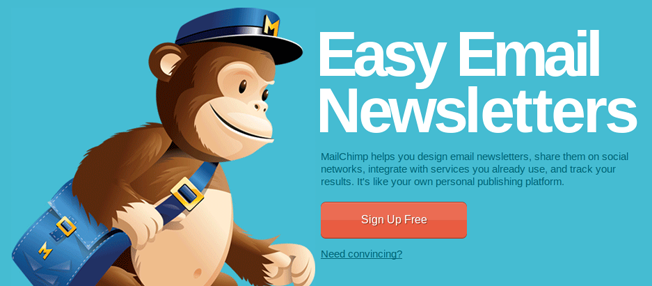
A great example of this is MailChimp:
There are plenty of email service providers out there, so for a company like MailChimp it’s quite difficult to differentiate yourself from the pack. MailChimp made themselves different by focusing on making email campaigns easy.
If you think about it, whose usually tasked with sending out the email newsletter? It’s usually someone who’s specialty is not marketing, who’s not technical, and has a never ending “to-do” list. Making it easy is really important!
And by looking at their home page, they make this very clear:
Not to mention, if you have ever used their service – everything from campaign creation to sending out your emails is really simple and clear.
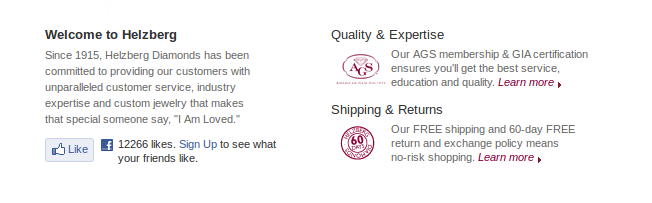
Another example is Helzberg Diamonds. They are a little more subtle about their USP, but they definitely address “Why you should buy from them”.
For example they state free shipping on orders over $149:
Scroll down the page a little bit, and you’ll see some reassurances:
Certainly having 12,266 fans on Facebook doesn’t hurt their conversion rate, either.
What are the reasons customers should buy from you? Is it a money back guarantee? Free shipping? Find what yours are and make it clear.
2. They Test Their Calls-to-Actions
Hubspot featured a company on their blog that increased their conversions 105.9% by having a clear call-to-action that leads to a whitepaper. In this whitepaper, the company informs the visitor about the company & what they offer.
The company also made a more effective headline and used meaningful graphics to help guide the user.  Just these three changes led to more than doubling their conversion rate.
Mozilla increased downloads of their popular Firefox browser by having a stronger call-to-action. “Download Now – Free” performed better than “Try Firefox 3”. They made it clear that Firefox was free and called the viewer to download the program.
Proflowers is a site known for high conversion rates, with some estimates being around 40%. They make it really easy for customers who are in a hurry to buy flowers – they can start by simply picking a day they need the flowers by:
ProFlowers eliminates any initial questions that the prospect may have. The prospect knows right away the answer to the question “can you get this to me by __?”  They’re helping to overcome any obstacles to a purchase. See if you can do something like Proflowers has done—answer one of your most popular questions in a clear, above the fold headline. If some obstacles to prospects purchasing from you are:
“I don’t feel comfortable purchasing from a small company like yours” – then some ideas to help overcome this fear could be:
Include a behind the scenes video of your company and how your operations work.Include a banner at the top with customer testimonials, each one showing for a few seconds.Give your unique value proposition right at the top. Tell how long you’ve been in business, how many orders you’ve shipped, customer satisfaction rate, etc.
How do you find out what questions your customers have?
You should always be asking your customers questions to get their feedback. Understanding your customer’s pain points, confusion and what they are really looking for can help you design a site that converts higher. KISSinsights is a tool that allows you to do just that:
3. They Test Their Headlines
The headline can make or break your website, and possibly a sale. As mentioned in the intro, the first impression is formed quickly, and the headline is a big part of that impression. It’s important to test and see what resonates most with your visitors. There is no magic formula, but there are some good guidelines that you can follow.
37signals improved conversions of their Highrise product by 30% by having the headline “30-day Free Trial on All Accounts”. Their worst headline was “Start a HighRise Account”.
The key lesson from this is that it’s important to have a clear headline with a unique value proposition. “Start a HighRise Account” doesn’t tell of any benefit. They don’t give a reason why they should sign up now. Consider having adding free trial in your headline or try “Save __% and start [enter the benefit of your product here]”. The important thing is to test to see what works.
CityCliq improved their conversions by making a clear headline that tells the user what they’ll get. First, the tested headlines:
Businesses grow faster online!Online advertising that works!Get found faster!Create a webpage for your business
The winner:
This is the best headline because it’s clear and avoids any language that you may find in your spam folder. Be creative with your headlines and inform the visitor of what you do or the benefits of your product.
One more tip: having a headline that addresses a pain point has in one case, increased conversions by 32%.
4. They Tend To Have Short Forms
Conversion expert Tim Ash recommends keeping forms to only the essentials. How many times have you been ready to sign up for something, continue and see 25+ fields that you have to fill in? I have many times and I’ll often just leave the site. It’s important to respect the users time. If you’ve gotten the user as far as wanting to sign up, it’s pivotal that you don’t let them drop off because your form is too long.
Take a look at Dropbox’s signup form:
Dropbox is only asking for what they need. No username, no security questions, no birth date, no verification code, no re-enter password field, nothing unneeded.
For Proflowers, they don’t force you to signup before you order. If you’re a first time buyer, they’re not interrupting your buying process at all. You don’t have to create a new account; you have the option to do that after you make your purchase. Proflowers is removing any obstacles to ordering.
Test the number of form fields!
Most conversion experts will agree that simplifying forms and making them clearer should be the direction you want to aim for when you ready to start iterating.
Sometimes, having more fields can improve your form conversion rate. However, in general, fewer fields tend to produce better conversions (it depends on what your form is for). The point is: Don’t look for rules of thumb, test and find out for yourself!
Other Techniques To Try
Implementing a “Chat Now” button increased free signup form fills by 31%.Cars.com recently boosted their conversion rate 2.7% by having a security seal on their site.Including discount information in the title (e.g. 15% off Product A vs Product A) increased add to cart conversions by 148.3%.Benefits, social proof and credibility indicators led to a 144.1% improvement on landing pages.Putting people on your homepage can have a huge impact on conversions.Including a pain point in a headline increased conversions by 31%.Changing your call-to-action button from green to red has been shown to increase conversions by as much as 34%.Try moving around your Buy Now button. Appsumo did this (among other things) and doubled their conversion rate.Changing a button from “See Plans and Pricing” to “Get Started Today” increased conversions by 252%.Turning CAPTCHA off led to no conversions lost and very little spam mail in this case study.Showing testimonials can drive validation.Using natural language on forms has been shown to increase conversions by 25-40%.Having a nice mobile site can double conversions.Segmenting your users can increase conversion rates be giving more relevant content to the user.Putting your call-to-action button can really improve conversions.
The important thing is to test and experiment. What has worked for you? Let us know in the comments!
digital-mark-manager
This Digital Marketing Manager interview profile brings together a snapshot of what to look for in candidates with a balanced sample of suitable digital marketing interview questions.


Digital Marketing Manager Interview Questions

Your Digital Marketing Manager should have a strong grasp of current marketing tools and strategies and be able to lead integrated digital marketing campaigns from concept to execution. This means working with the marketing team, any supporting teams (such as programmers), and any vendors to launch campaigns on time and on budget. Interview questions for digital marketing should assess their ability to strategically plan campaigns based on existing needs, and analyze results when campaigns have concluded. 
As a marketing manager, this person will likely report to a VP of Marketing or a Marketing Director. Although they are not directly responsible for the long-term success of the company, they should be able to see how their activities impact the big picture goals of the business. This person must be organized, resourceful, creative, and have strong interpersonal skills. They may be in charge of hiring and training staff. If so, be sure to add interview questions around coaching, motivating, delegating tasks, and monitoring the performance of their colleagues.
Use the following digital marketing interview questions as a starting point and tailor them according to your needs. These are open-ended, situational questions that encourage candidates to speak at length about their approach to planning, problem-solving, and decision-making. The best candidates will be metrics-driven and will have exceptional communication skills. They’ll demonstrate success through numbers and have strong work samples to share. They’ll also be knowledgeable about your product and customers, and will tailor their digital marketing interview questions and answers accordingly. They may even prepare a campaign plan, or offer original suggestions for improvement.

Role-specific questions

  • Talk about one of your most effective campaigns. What made them so effective?
  • How do you know when a campaign has failed? What metrics do you use?
  • What does the conversion funnel look like at your company?
  • How many people are on your current marketing team? What are their roles?
  • How would you describe your current brand’s tone of voice and visual identity?
  • How do your customers inform your approach to brand-building?
  • How do you get product feedback from your customers?
  • What tools do you use to stay organized?
  • Talk about your experience with editorial calendars.
  • What is the relationship between SEO and content marketing?
  • What are some common SEO mistakes in digital content production?
  • What are the most important and effective social media channels for your brand?
  • What is your experience with marketing automation?
  • What role does paid advertising play in your overall strategy?
  • What is your experience with co-marketing campaigns?
  • What is the importance of thought leadership at your current organization?
  • Describe a time you worked with a team to create a campaign on a tight budget.
  • What is your approach to structuring a marketing budget?
  • What is your approach to editing copy?
  • Describe a time you gave constructive feedback to a colleague.
  • Describe a time your team didn’t agree with your direction. How did you handle it?
  • How would you handle negative feedback about your brand?
  • What’s interesting about our current marketing? What could we do better?

DOWNLOAD THIS SAMPLE AS PDF DOCUMENT
Digital Marketing Manager Interview Questions PDF
Thank you for your continued viewing of our blog, we hope you find our contents insightful. You can also help us serve you better and tell us how you think we can deliver better quality to you.